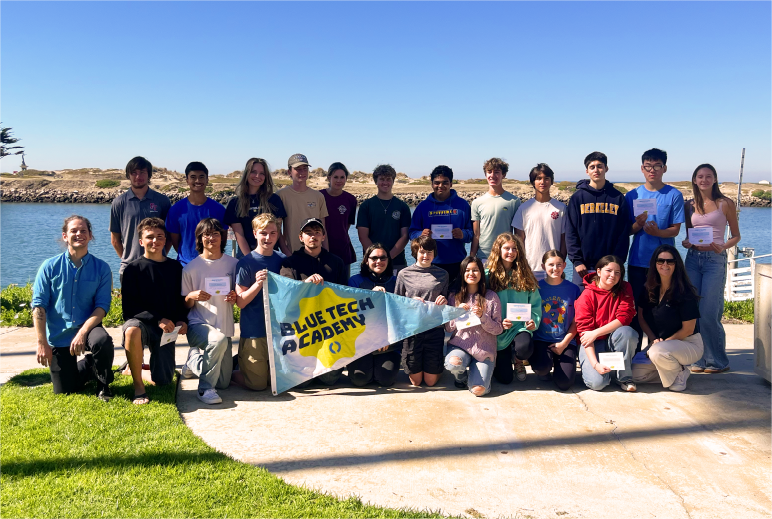
What is Blue Tech Academy?
Applied marine technology for students. Blue Tech Academy is an immersive, field-based program designed around the application of marine technology for high school students. The program is designed to be accessible, scalable, and modular to different schools and organizations.
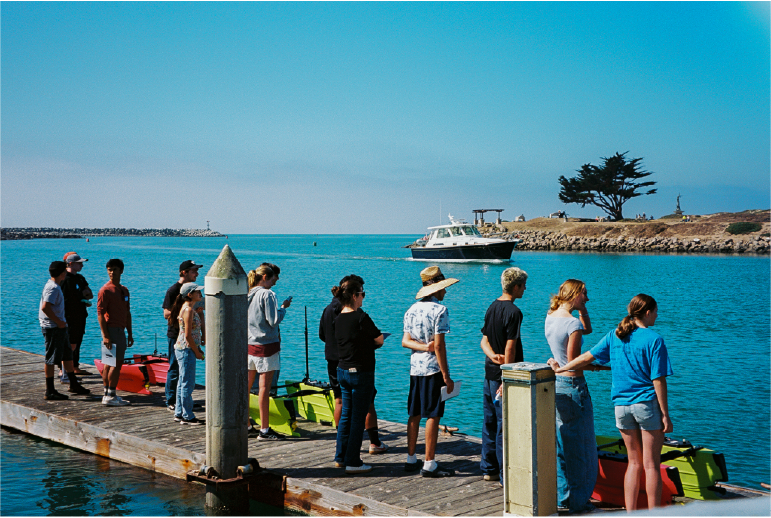
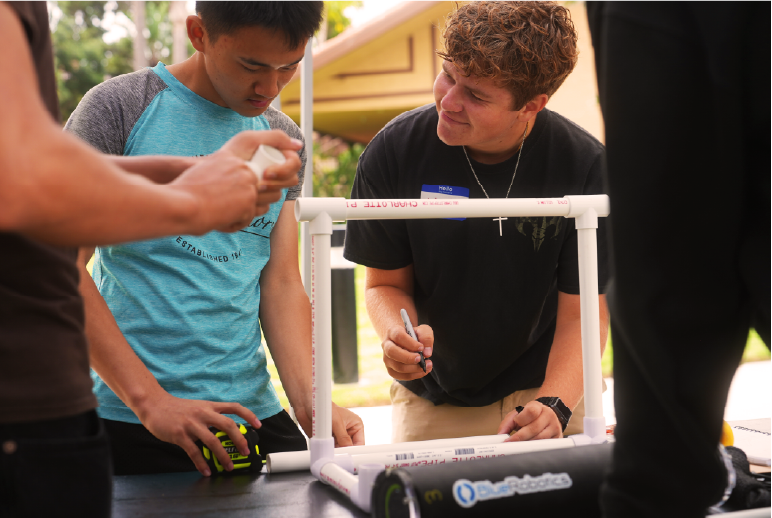
Students build and operate marine technology systems, conduct field investigations, and analyze environmental data from their local waterways. Each module introduces a tool that is actively used across marine science, ocean management, and the broader blue economy. Students work directly with the technology in coastal environments, applying professional tools in real-world contexts.
Schools can implement a single module or combine modules into a multi-session program or pathway. Modules align with national science standards.
Already know you want to host a Blue Tech Academy? Let’s connect!
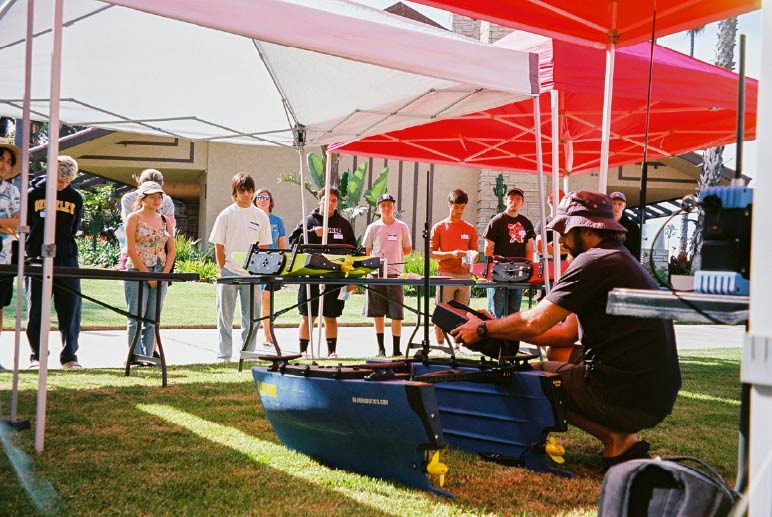
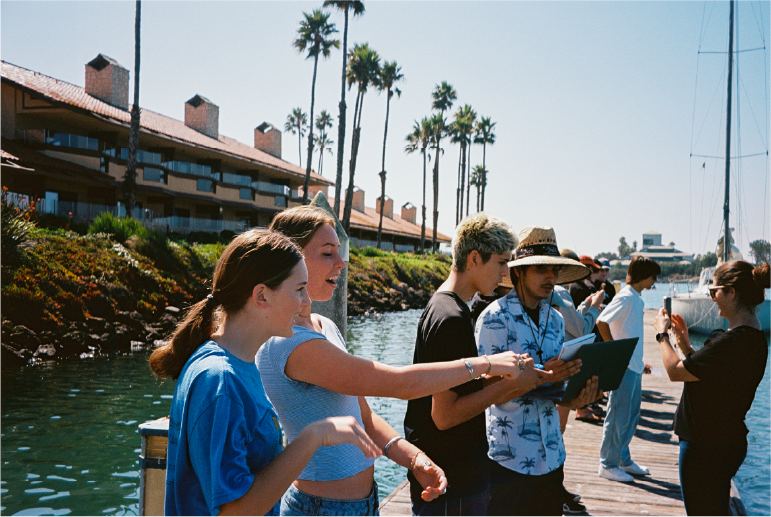
Where does it happen?
In the wild! Blue Tech Academy is designed for high schools and partner organizations with access to water and the capacity to support field-based learning. Ideal venues include high schools and school districts located near coastal, harbor, or inland waters, as well as aquariums, marine science centers, and museums that offer secondary education programs. Harbors, marinas, and port districts partnering with schools also provide strong settings for hosting the program.
Programs use a combination of classroom space, docks, pools, and nearby water bodies to support applied, hands-on fieldwork.
Where does it happen?
Blue Tech Academy is designed for high schools and partner organizations with access to water and the capacity to support field activities.
Typical venues include:
- High schools and school districts with nearby coastal, harbor, or inland water access
- Aquariums, marine science centers, and museums with secondary education programs
- Harbors, marinas, and port districts partnering with schools
Programs use a combination of classroom space, docks, pools, and nearby water bodies to support applied field work.
Who can host it?
Blue Tech Academy is delivered through partnerships between schools and maritime organizations.
- School Leaders and Educators: Superintendents, principals, and teachers seeking to connect students with applied marine science and technology.
- Marine Education and Science Organizations: Aquariums, museums, and citizen science organizations supporting high school field programming.
- Maritime Employers and Industry Partners: Ports, operators, and ocean technology companies providing mentorship, expertise, and workforce insight.
If you are part of an organization where learning is happening, you can host Blue Tech Academy!
Why Blue Tech Academy?
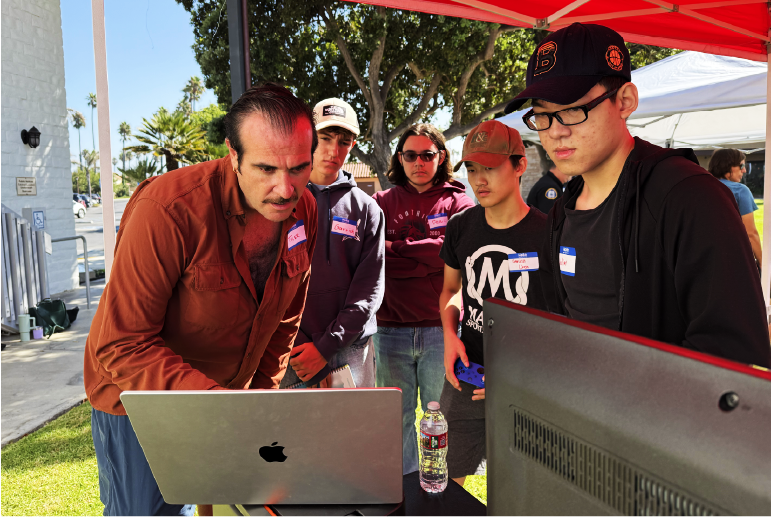
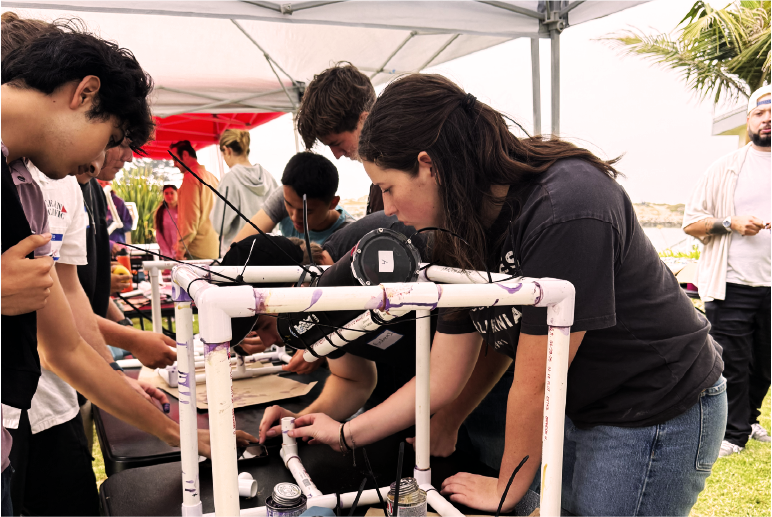
Curiosity is built through experience! Being on the water, operating real tools, and seeing the underwater world directly creates a level of inspiration and engagement that cannot be replicated in a classroom or on a device. These experiences give students a tangible connection to science, technology, and the environment around them.
Blue Tech Academy is designed to unlock the ocean for students, showing them the full range of possibilities in their own communities and beyond. It expands access to marine technology, sparks curiosity about local waters, and creates pathways into marine science, conservation, and maritime careers.
Why Blue Tech Academy?
Curiosity is built through experience! Being on the water, operating real tools, and seeing the underwater world directly creates a level of inspiration and engagement that cannot be replicated in a classroom or on a device. These experiences give students a tangible connection to science, technology, and the environment around them.
Blue Tech Academy is designed to unlock the ocean for students, showing them the full range of possibilities in their own communities and beyond. It expands access to marine technology, sparks curiosity about local waters, and creates pathways into marine science, conservation, and maritime careers.

Blue Tech Academy modules integrate preparation, field deployment, data analysis, and communication. Modules can be offered independently or combined into a structured program. Below are a few module examples:
Bathymetric Survey
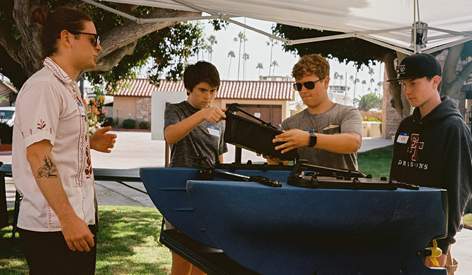
Students measure and map the seafloor using uncrewed surface vessels and sonar. They design survey plans, collect geospatial data, and generate bathymetric maps to study underwater terrain and coastal processes.
This module supports investigations into earth systems, water-driven surface processes, and spatial modeling.
Drop Camera
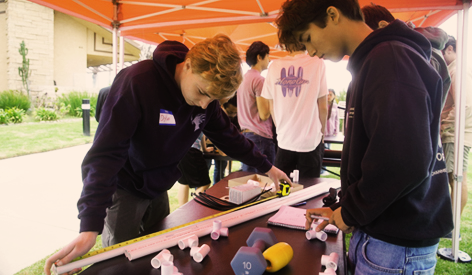
Students design, build, and deploy underwater camera systems to observe local marine environments. They collect video data to investigate habitat structure, species presence, and ecosystem interactions.
This module emphasizes observational science, investigation design, and data communication.
ROV Piloting
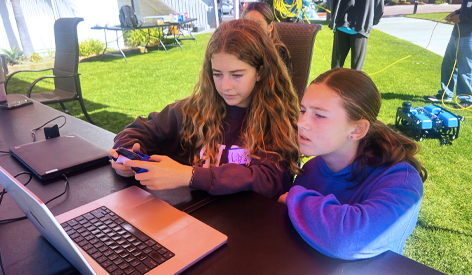
Pilot like a pro! Students learn remotely operated vehicle setup, safety, and piloting. Students learn remotely operated vehicle setup, safety, and piloting. They conduct underwater inspections and retrieval tasks, connecting system design to field-based marine operations.
This module builds technical confidence and teamwork while emphasizing iterative problem-solving and critical thinking.
ROV Control Scripts
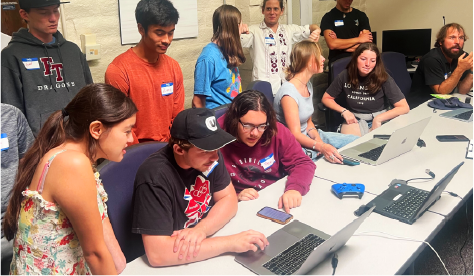
Become the brain behind the bot! Students learn ROV control systems and the fundamentals of Lua, a widely used programming language. They write, upload, and run scripts that enable their ROVs to perform autonomous tasks.
This module develops computational thinking and problem-solving skills while connecting software to underwater robotic systems.
Capstone Experience
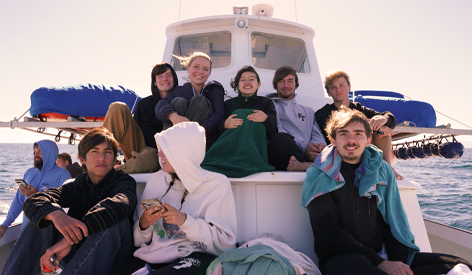
Bring it all together! Students integrate skills from all modules during a full field deployment. They conduct hands-on surveys, collect environmental data, and operate the tech used in previous modules in a nearshore environment.
This capstone brings together skills from every module in a cohesive, field-based marine technology experience. Students operate real tools used by scientists to explore and understand the ocean, connecting classroom learning to data collection and scientific contribution.
Science Communication + Showcase
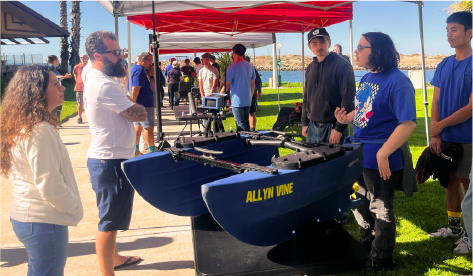
Communicate it clearly! Students present findings to peers, educators, and community partners. They synthesize data, interpret results, and communicate evidence-based conclusions.
This module emphasizes clear communication, reflection, and ownership of learning.
Students completing the full Blue Tech Academy sequence receive a Blue Tech Academy Certificate of Completion recognizing their training in applied marine technology.
Equipment and Implementation
Modules include recommended equipment configurations and guidance for scaling by cohort size. Each module requires schools or organizations to fund their own equipment. Schools can acquire technology incrementally, beginning with a single module and expanding over time.
Typical configurations include:
- Bathymetric Survey: Approximately one BlueBoat per five students
- ROV Pilot School: Two ROV systems per cohort plus simulator stations
- Drop Camera: One drop camera system per five students
The Bathymetric Survey and ROV Pilot School modules require full marine vehicles and represent the highest initial investment. The Drop Camera module is the most accessible entry point.
Blue Robotics provides guidance on equipment selection, deployment, and technical support.
Engaging Without Equipment
Blue Tech Academy is designed to meet schools and communities where they are. Schools and partners can engage with Blue Tech Academy without immediate equipment acquisition.
Options include:
- Pilot Modules: Structured leaning experiences to test how BTA fits within a school or partner’s schedule
- Demonstrations and Workshops: Hands-on activities in the classroom or out in the field
- Curriculum Materials: Use of BTA instructional materials to support classroom learning, project-based activities, and alignment with existing science and technology courses
- Instructor Training and Field Workshops: Professional development opportunities that prepare educators to lead classroom instruction and manage field-based activities
For information on how to pursue Blue Tech Academy, schools and organizations can complete the interest form to indicate goals, funding pathways, and preferred implementation options.
Engaging Without Equipment
Blue Tech Academy is designed to meet schools and communities where they are. Schools and partners can engage with Blue Tech Academy without immediate equipment acquisition.
Options include:
- Pilot Modules: Structured leaning experiences to test how BTA fits within a school or partner’s schedule
- Demonstrations and Workshops: Hands-on activities in the classroom or out in the field
- Curriculum Materials: Use of BTA instructional materials to support classroom learning, project-based activities, and alignment with existing science and technology courses
- Instructor Training and Field Workshops: Professional development opportunities that prepare educators to lead classroom instruction and manage field-based activities
For information on how to pursue Blue Tech Academy, schools and organizations can complete the interest form to indicate goals, funding pathways, and preferred implementation options.
Origins and Partnerships
Blue Tech Academy was piloted at Ventura Harbor in partnership with Foothill Technology High School within Ventura Unified School District. The pilot demonstrated that high school students can operate advanced marine technology and engage deeply with applied ocean investigations when given access to real environments and tools.
The program continues to expand through partnerships with schools, maritime organizations, and marine science institutions.