$0.00

The Underwater Wireless Charging System (UWCS) is a wireless charging and data transfer system for underwater robotics developed in collaboration with WiBotic and the University of Washington Applied Physics Lab. It simplifies recharging and communication for autonomous vehicles by removing the need for physical connections. No connectors to align, no tethers to manage—just dock, charge, and sync.

UWCS is an early-stage system we’re releasing as early access to a small number of testers. We’re looking for teams ready to put it to use in real-world applications. If you see the potential of wireless charging and data transfer in your system, sign up to become a tester here.

SKU: BR-101783 Category:
HS Code: 8504.40.9530
Country of Origin: USA

Product Description

UWCS changes the way underwater vehicles recharge and communicate. By combining wireless power transfer with a wireless data link, it eliminates the need for traditional physical connectors and tethered connections in autonomous systems. A vehicle can easily dock itself and begin charging and syncing data.

We developed this system together with WiBotic, who have a lot of experience in wireless charging systems. We see UWCS opening new possibilities for:

  • Swarm robotics, where manual charging is impractical.
  • Autonomous systems research and resident vehicles.
  • Docking solutions for inspection and aquaculture.
  • A wet-mateable connector replacement that avoids wear and failure.
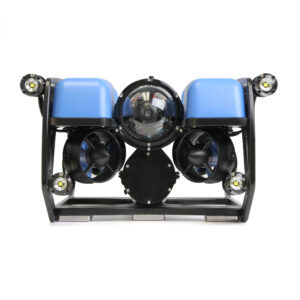
ROV equipped with receiver docking into transmitter.

How It Works

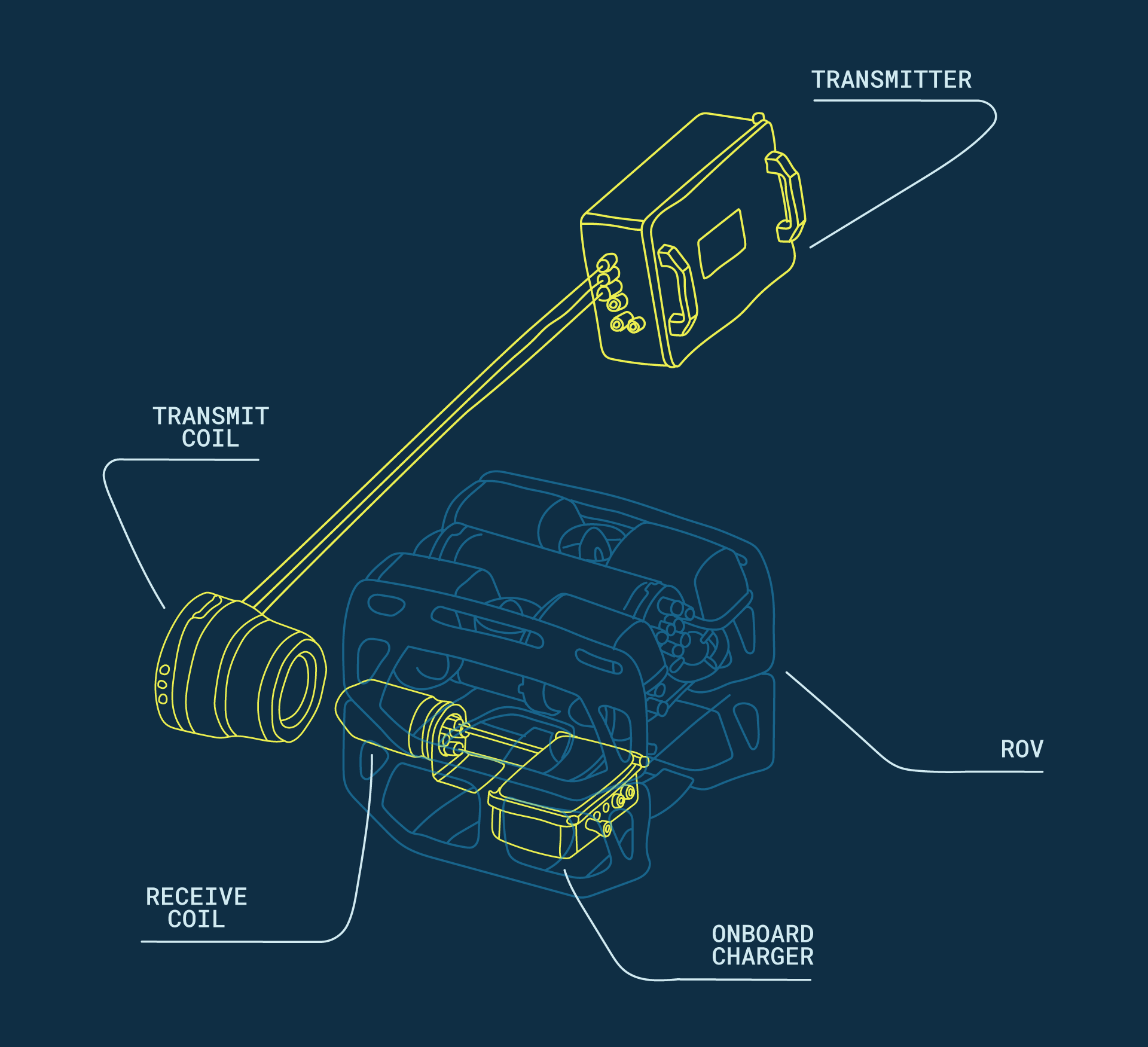
UWCS has two main hardware systems that work together to deliver wireless power and data underwater:

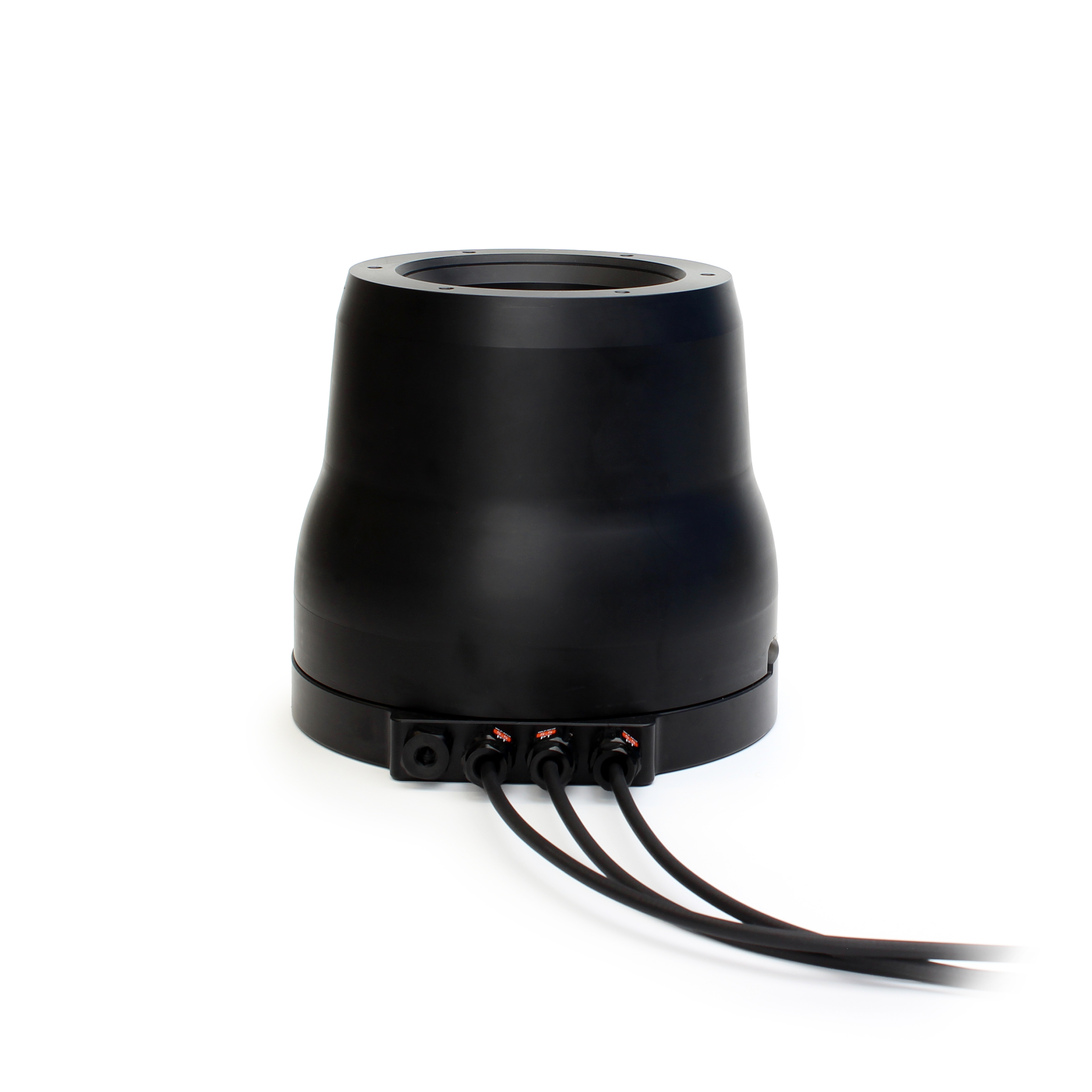
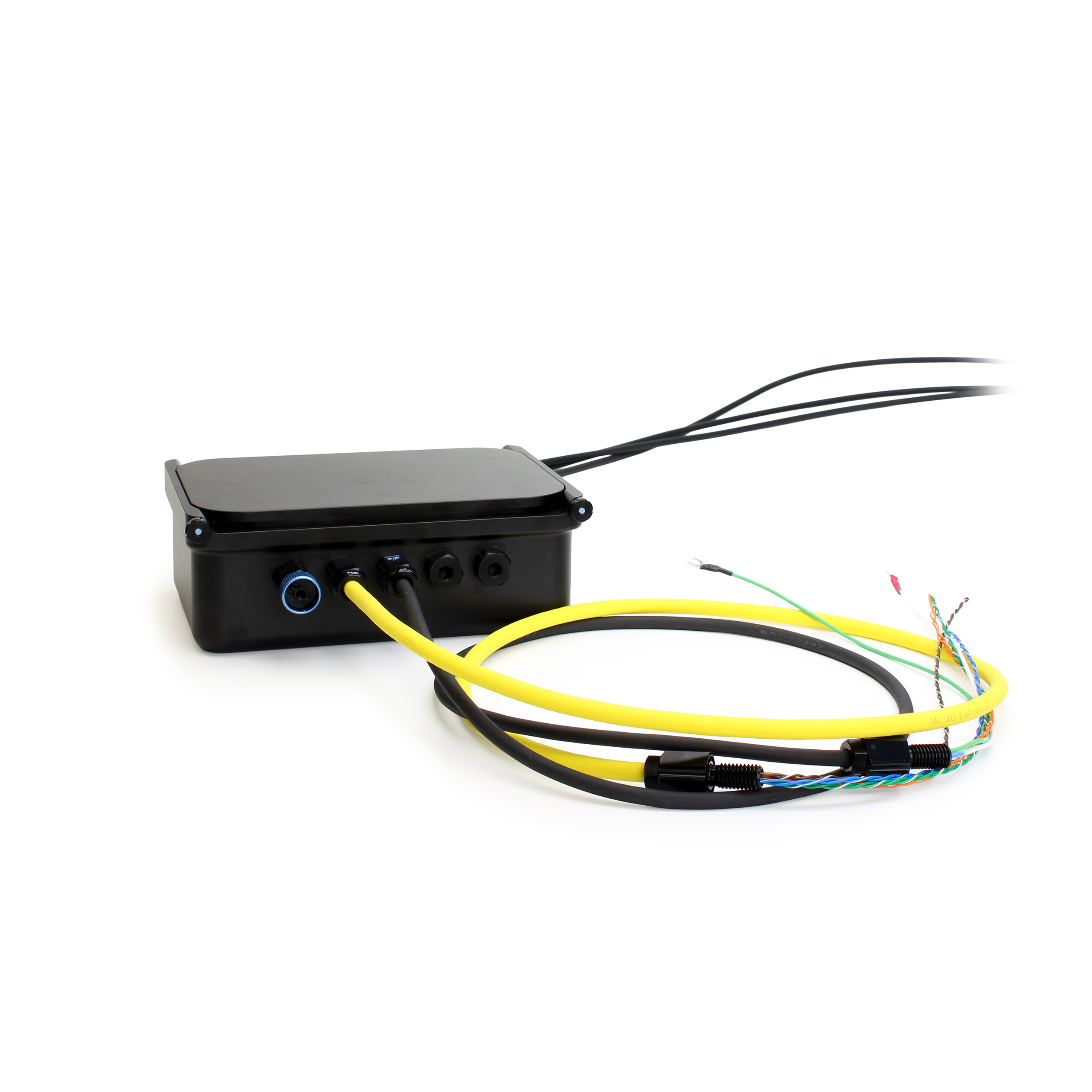
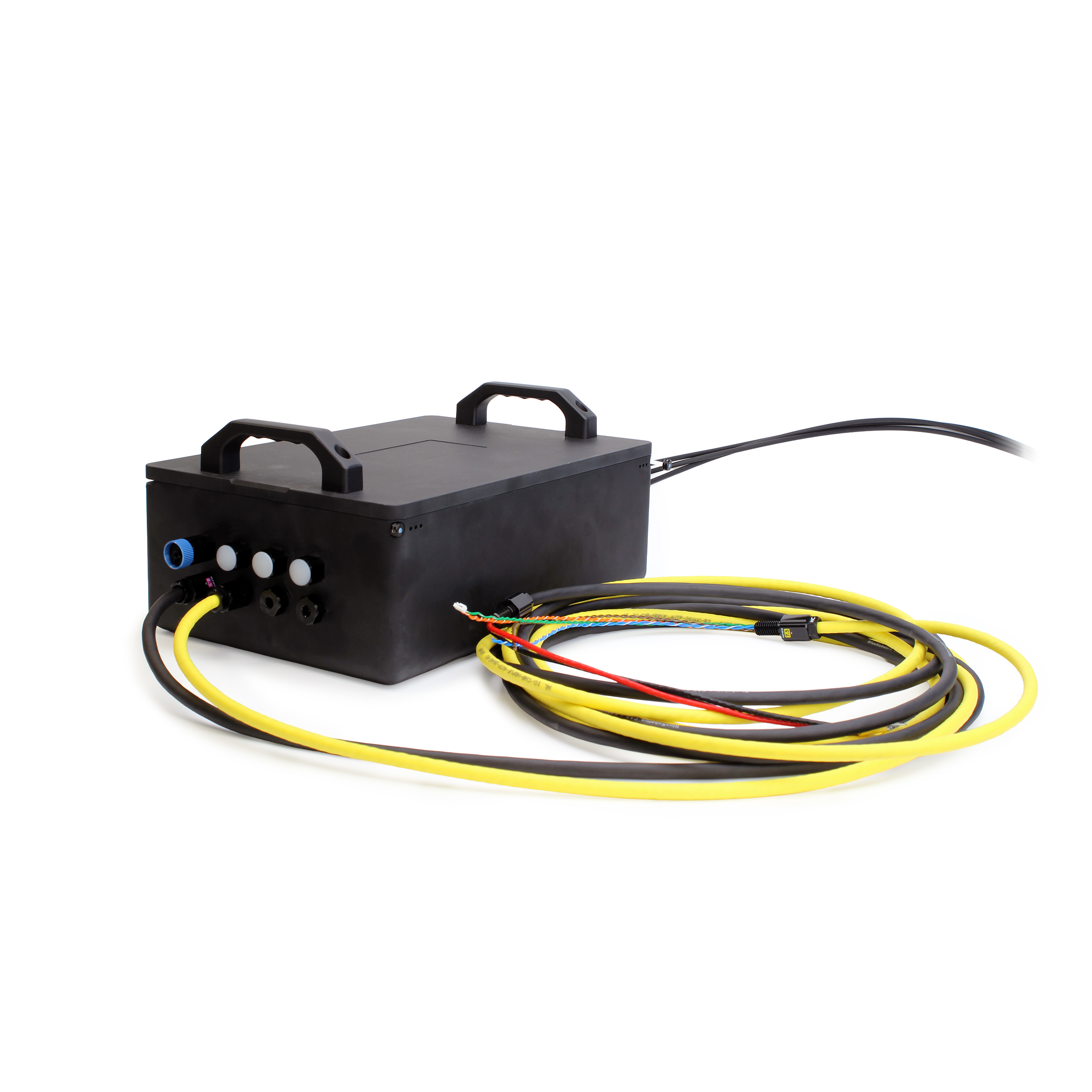
  • Transmitter (dock side) – The transmitter connects to a DC power source and generates a high-frequency wireless power signal. This signal travels to the transmit coil that creates an electrical field that transfers power wirelessly. The transmitter and the transmit coil are the “dock” part of the system and can be mounted vertically or horizontally to make it simple for vehicles to line up and start charging. Because it supplies wireless power rather than a fixed DC voltage, a single transmitter can support a diverse fleet of vehicles.
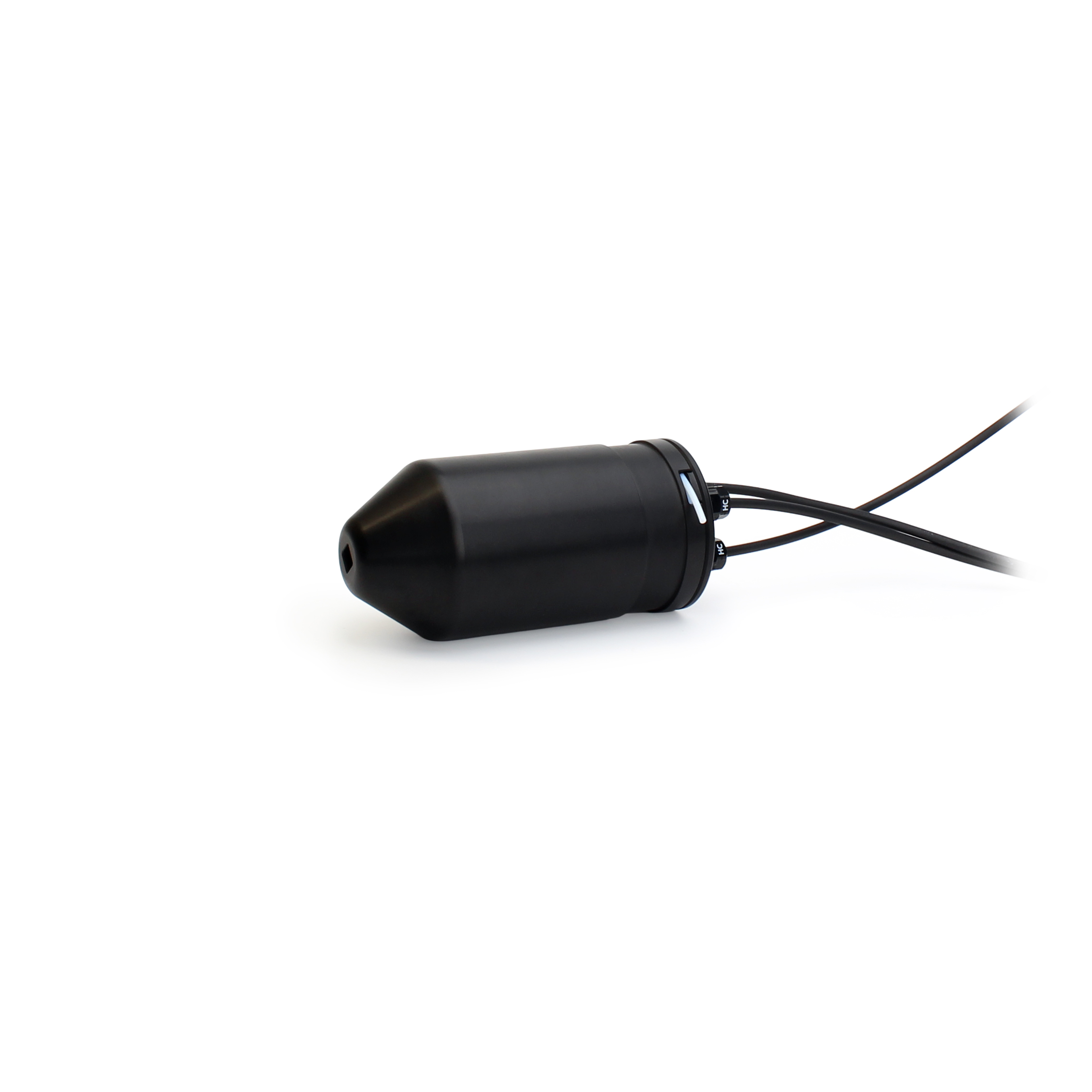
  • Onboard Charger (vehicle side) – The vehicle is equipped with a small onboard charger connected to a receive coil. This circuit collects the wireless power from the receive coil and converts it back into a usable DC voltage. The onboard charger is a fully programmable battery charger that follows the correct charge cycles for a wide range of batteries, including all lithium chemistries. Operators can tune output voltage and current to optimize charging for any battery onboard.

To charge, the vehicle docks the receive coil into the transmit coil to begin wireless power transfer up to 150 W. A separate set of coils in the same housing creates a data connection for communication via Ethernet between the vehicle and the dock to offload data or provide updated mission instructions.

The whole system is controlled using the WiBotic Control Panel, a web-based interface hosted on the transmitter accessed over the local network or over the internet. It lets operators monitor live charging, adjust charging parameters like voltage and current, and manage multiple vehicles in a fleet.

Become a Tester

UWCS is still in its early stages, and we’re opening up a limited number of prototype units for early access. Our goal is to explore and learn how wireless power and data can expand what’s possible in underwater robotics, from aquaculture to research, to applications we haven’t even imagined yet.

Testers will receive a UWCS prototype unit at no cost, in exchange for their time and feedback. All requirements for the program are outlined in the application form.

If you’d like to be part of this program, sign up here.

Product Description

UWCS changes the way underwater vehicles recharge and communicate. By combining wireless power transfer with a wireless data link, it eliminates the need for traditional physical connectors and tethered connections in autonomous systems. A vehicle can easily dock itself and begin charging and syncing data.

We developed this system together with WiBotic, who have a lot of experience in wireless charging systems. We see UWCS opening new possibilities for:

  • Swarm robotics, where manual charging is impractical.
  • Autonomous systems research and resident vehicles.
  • Docking solutions for inspection and aquaculture.
  • A wet-mateable connector replacement that avoids wear and failure.
ROV equipped with receiver docking into transmitter.

How It Works

UWCS has two main hardware systems that work together to deliver wireless power and data underwater:

  • Transmitter (dock side) – The transmitter connects to a DC power source and generates a high-frequency wireless power signal. This signal travels to the transmit coil that creates an electrical field that transfers power wirelessly. The transmitter and the transmit coil are the “dock” part of the system and can be mounted vertically or horizontally to make it simple for vehicles to line up and start charging. Because it supplies wireless power rather than a fixed DC voltage, a single transmitter can support a diverse fleet of vehicles.
  • Onboard Charger (vehicle side) – The vehicle is equipped with a small onboard charger connected to a receive coil. This circuit collects the wireless power from the receive coil and converts it back into a usable DC voltage. The onboard charger is a fully programmable battery charger that follows the correct charge cycles for a wide range of batteries, including all lithium chemistries. Operators can tune output voltage and current to optimize charging for any battery onboard.

To charge, the vehicle docks the receive coil into the transmit coil to begin wireless power transfer up to 150 W. A separate set of coils in the same housing creates a data connection for communication via Ethernet between the vehicle and the dock to offload data or provide updated mission instructions.

The whole system is controlled using the WiBotic Control Panel, a web-based interface hosted on the transmitter accessed over the local network or over the internet. It lets operators monitor live charging, adjust charging parameters like voltage and current, and manage multiple vehicles in a fleet.
Become a Tester

UWCS is still in its early stages, and we’re opening up a limited number of prototype units for early access. Our goal is to explore and learn how wireless power and data can expand what’s possible in underwater robotics, from aquaculture to research, to applications we haven’t even imagined yet.

Testers will receive a UWCS prototype unit at no cost, in exchange for their time and feedback. All requirements for the program are outlined in the application form.

If you’d like to be part of this program, sign up here.

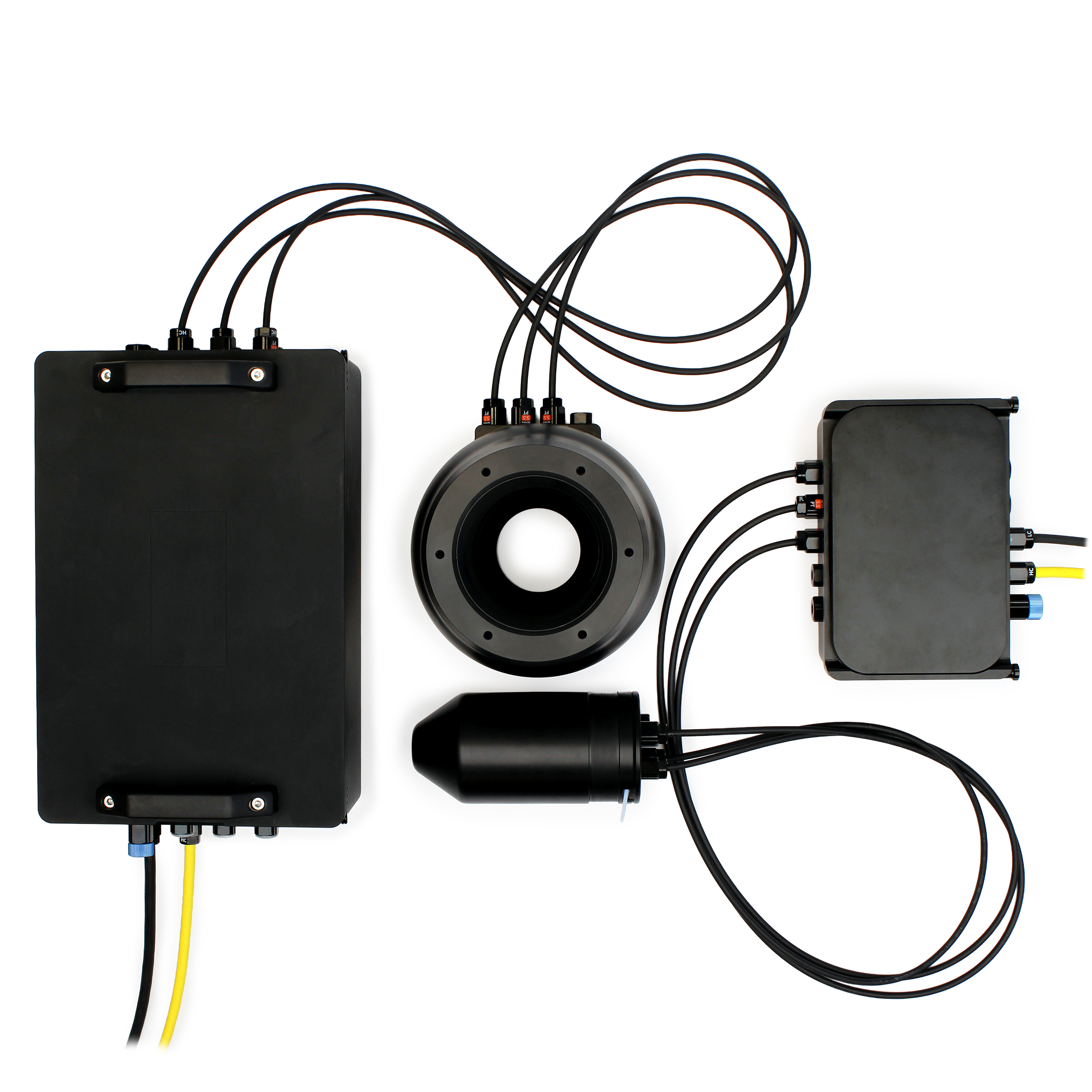
Components are not to scale.
Onboard Charger
Receive Coil
Transmit Coil
Transmitter
  • 1 x Transmitter and Transmit Coil assembly
  • 1 x Onboard Charger and Receive Coil assembly

Specifications

ParameterValue
Performance
Maximum Rated Depth (seawater)300 m
Operating Temperature-20 to 45°C
Transmitter
Wibotic ModelTR-302
Default IP Address192.168.2.20
Power DeliveryUp to 300 W
Input Voltage48 VDC
Max Input Amperage12.5 A
Cables
Power5 m, 2-conductor, 12 AWG
Data5 m, 4-UTP, 26 AWG
Cable Connectors
Power#10 spade
Data4-position JST GH
Connector Pinouts
Power1 - Red - Vin
2 - Black - Ground
Data (Ethernet)1 - White/orange - TX+
2 - White/green - RX+
3 - Green - RX-
4 - Orange - TX-
In Water WeightTBD
In Air WeightTBD
Onboard Charger
Wibotic ModelOC-262
Battery CompatibilityLiIon
LiPo
LiFePO4
Lead Acid/SLA
NiMH
NiCAD
Battery Voltage Compatibility Range8–58.4 VDC
Max Charging Current12 A
Max Charging Power*150 W
Cell Balancing/BMSNot included
Cables
Power1 m, 2-conductor, 16 AWG
Data1 m, 4-UTP, 26 AWG
Cable Connectors
Power#10 spade
Data4-position JST GH
Connector Pinouts
Power1 - Red - Vout
2 - Black - Ground
Data (Ethernet)1 - White/orange - TX+
2 - White/green - RX+
3 - Green - RX-
4 - Orange - TX-
Maximum Bandwidth90 Mbps
In Water WeightTBD
In Air WeightTBD

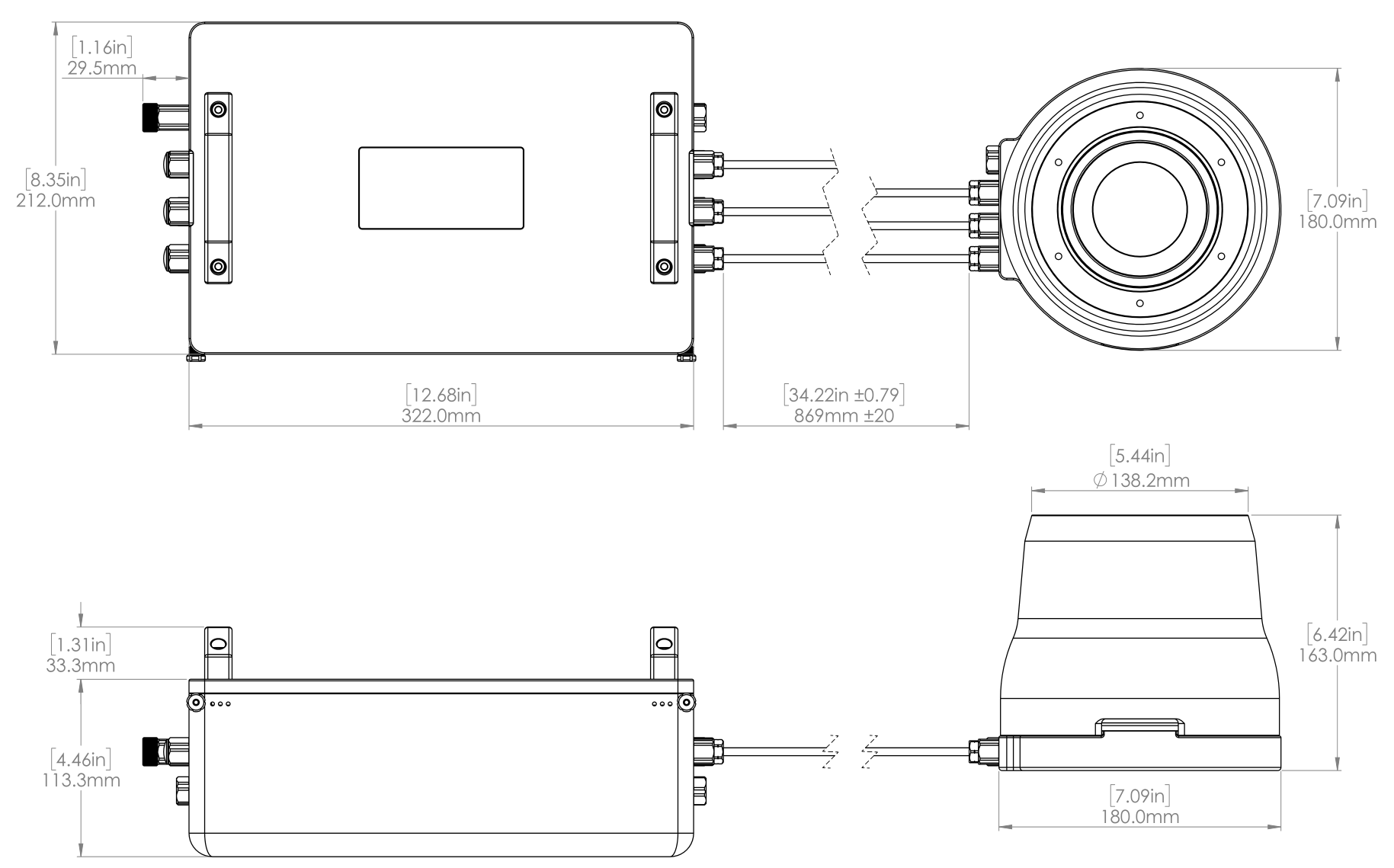
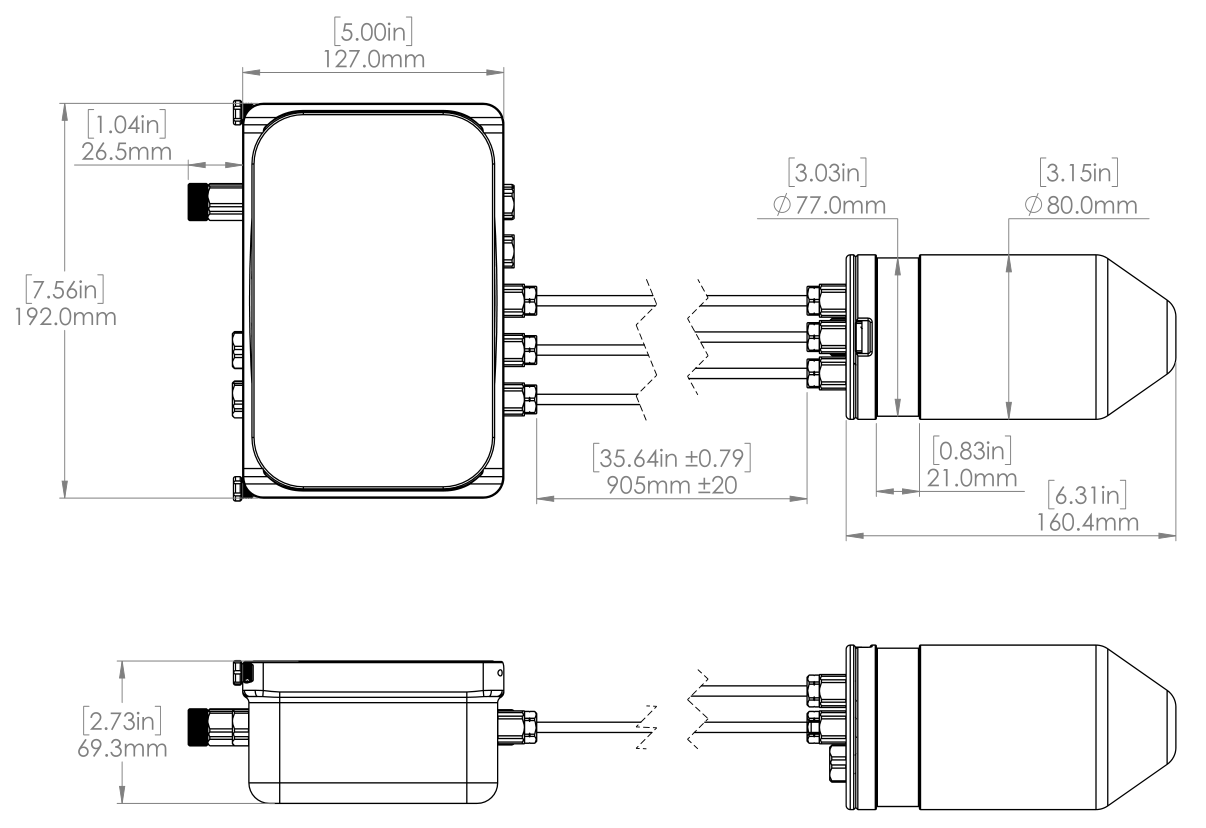
2D Drawings

Transmitter

Transmitter Drawing

Receiver

Receiver Drawing

3D Models

UNDERWATER_WIRELESS_CHARGING_SYSTEM_BR-101783 (.zip)

Revision History

1 January 2026

  • Prototype program opened
Private: Underwater Wireless Charging System Guide
Learn how to use the Underwater Wireless Charging System!

Support

Blue Robotics Technical Support Form